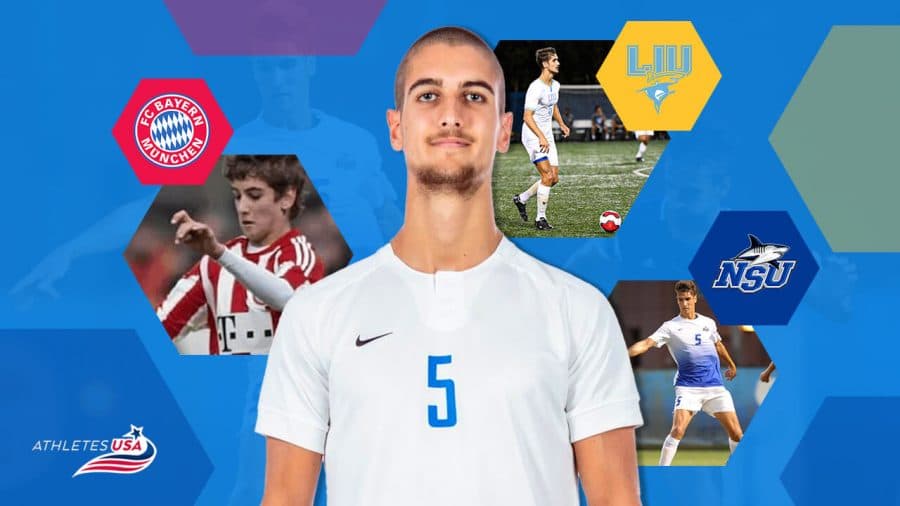
At 13, Stefan Faistenauer moved from FC Kufstein in Tyrol to the youth academy of FC Bayern Munich. A test match with the Tyrolean regional selection had put him on the club's radar; quarterly training invitations followed, then the offer to move to Munich. Two other Tyrolean talents, Alessandro Schoepf and Marco Friedl, were in the Bayern youth setup around the same time.
The year in Munich did not go to plan. A torn patellar tendon a week before preseason, months of rehab, and a 20-centimeter growth spurt kept him off the pitch and away from the team. He played a handful of games toward the end of the season, then faced the question every academy player eventually meets: stay and fight for a substitute role, or move and play.
He moved - first to SpVgg Unterhaching's youth, then back to Tyrol, where school came first. It was, he admits, his mother's call: education before football. He finished high school in Woergl and let go of the professional dream, without letting go of the game.
A highlight tape and 30 universities
In 2016, at 19, a former teammate told him about recruiting agencies that connect European players with American colleges. He put together a highlight tape. Around 30 universities from across the US got in touch.
He chose Nova Southeastern University in Fort Lauderdale, Florida - an NCAA Division 2 program where 25 of the 30 players in the squad were internationals, some from academies of the Premier League, La Liga, and the Bundesliga.
Three seasons and a bachelor's degree in business administration later, he wanted a new challenge for his final year of eligibility - college athletes can play four seasons within a five-year window. He took it at Long Island University in New York, an NCAA Division 1 program, while completing a master's in data analytics.
Football as the door opener
After his college career, he stayed in the US. Today he works for the German Chamber of Commerce in San Francisco as a project manager, supporting German companies entering the US market - sustainable energy, battery technology, autonomous driving.
The plan at 13 was the FC Bayern first team. What the pathway actually delivered was two American degrees, four years of Division 1 and 2 soccer, and a career on the US West Coast. Football, as he puts it, had its fair share in all of it.
Stefan first told this story to the Austrian sports channel LAOLA1 in an interview with Peter Altmann. This article is based on that conversation.
From the Athletes USA archive - first published June 2021
All stories